
Electric vs Pneumatic Telescopic Mast for Fire Trucks: Which Is Better?
When selecting a fire truck telescopic mast, height is only one part of the decision. The lifting mechanism also affects movement, cable routing, installation, cold-weather operation and long-term maintenance.
Two common options are the electric telescopic mast and the pneumatic telescopic mast. Both can elevate LED scene lights, PTZ cameras, antennas and other equipment on fire trucks, rescue vehicles and mobile command units. However, they work in different ways.
At Xushi, electric telescopic masts use an internal screw-driven actuator. Pneumatic telescopic masts use compressed air to extend multiple sections. Understanding these differences helps vehicle builders select a reliable system for their application.
How Does an Electric Telescopic Mast Work?
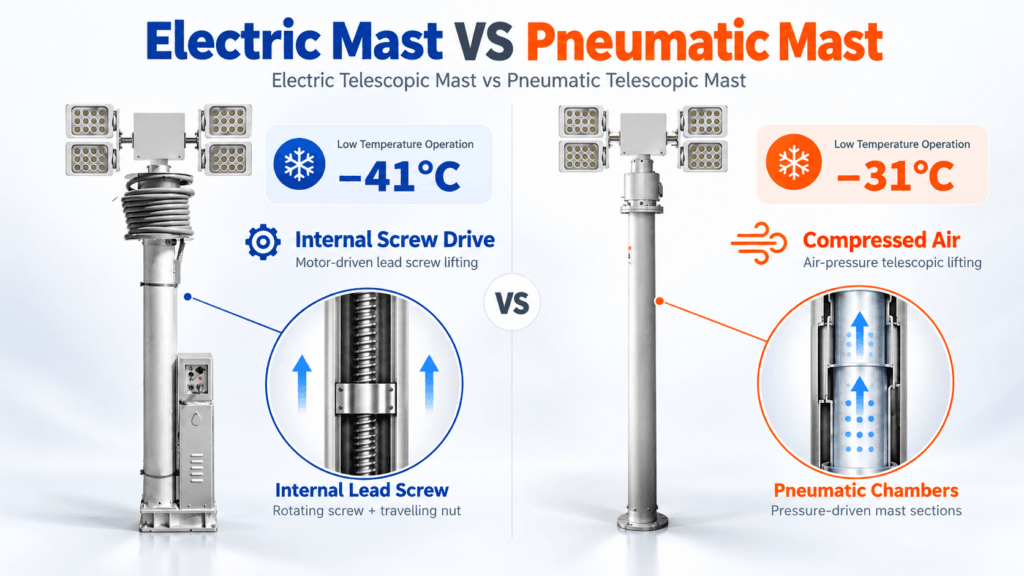
An electric telescopic mast uses a motor-driven screw mechanism inside the mast to extend and retract its sections. This provides controlled movement without requiring compressed air.
Main Advantages
Smooth, controlled lifting. The internal screw-driven mechanism supports stable extension and retraction. This is useful when the mast carries LED lighting heads, cameras or other equipment that benefits from predictable movement.
Cold-weather operation. Suitable Xushi electric mast configurations can operate at temperatures down to approximately -41°C (-41.8°F). This can make them useful for fire and rescue vehicles working in extremely cold regions. The minimum temperature should always be confirmed for the final configuration.
Simpler supporting equipment. Unlike a pneumatic mast, an electric screw-driven mast does not need an air compressor, pneumatic valves or air tubing for extension. It can be integrated with a suitable vehicle electrical supply and, depending on the project, wired controls, wireless remote controls or RS485-based systems.
Lower seal-related maintenance. Because lifting depends on the internal screw drive rather than airtight mast seals, aging of the seals around the telescopic sections does not normally stop the lifting mechanism. The motor, screw drive, wiring and other components still require regular maintenance; a longer overall service life is possible, but not guaranteed.
Important Limitation: External Cable Only
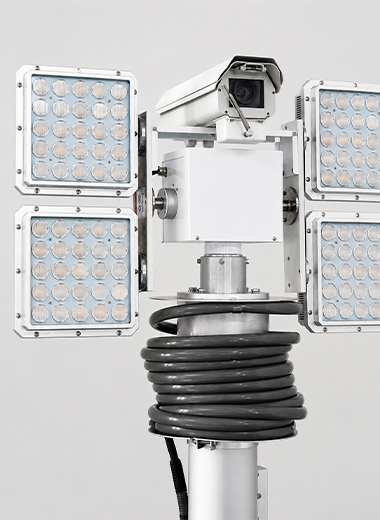
Xushi’s internal screw-driven design occupies the space inside the mast. As a result, electric telescopic masts use external cable routing only. A flexible or coiled cable supplies power or signals to the lights or other equipment at the top. Vehicle designers should allow sufficient space for cable movement during extension and retraction.
How Does a Pneumatic Telescopic Mast Work?
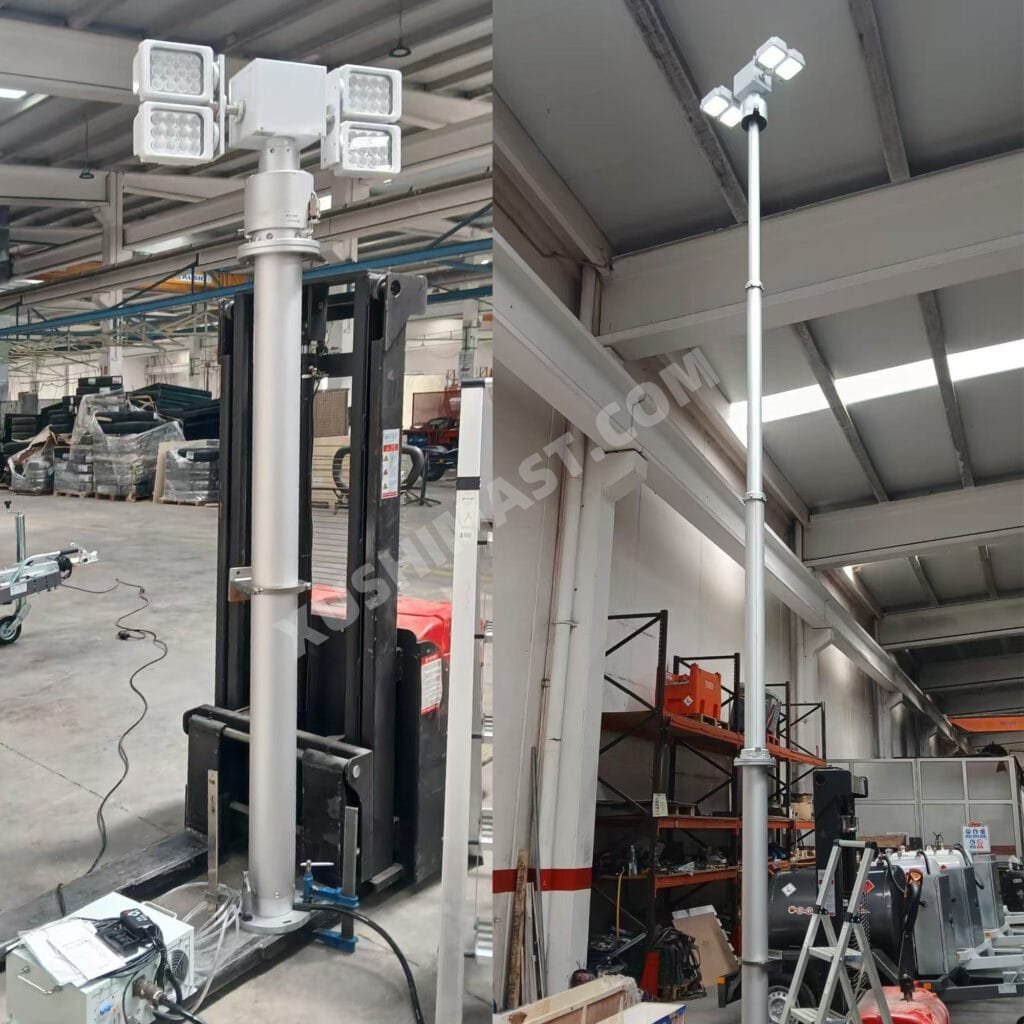
A pneumatic telescopic mast uses compressed air to extend nested mast sections. The system normally includes a mast, air supply or compressor, valves, tubing and a controller. The mast retracts according to its specific design when pressure is released.
Main Advantages
High extension ratio. Multiple nested sections allow a tall extended mast to fit into a relatively compact retracted length. This is valuable when a fire truck has strict transport-height or storage-space limits.
Fast deployment. With a suitable air supply and configuration, a pneumatic mast can extend quickly, helping crews establish elevated lighting soon after arriving at an emergency scene.
Flexible configuration. Pneumatic masts can be specified for different extended heights, retracted lengths, mast diameters and payload requirements. Depending on the model, internal or external cable routing may be available. Internal routing creates a cleaner appearance; external routing allows easier visual inspection of the cable.
Cold-weather capability. Xushi pneumatic mast configurations are generally designed for operation down to approximately -31°C (-23.8°F). Performance at low temperatures depends on the selected seals and system configuration.
Important Limitation: Seal Aging
A pneumatic mast relies on seals between its telescopic sections to retain air pressure. Over time, seals may harden, wear or lose their sealing performance. Possible symptoms include air leakage, slower extension and reduced lifting performance.
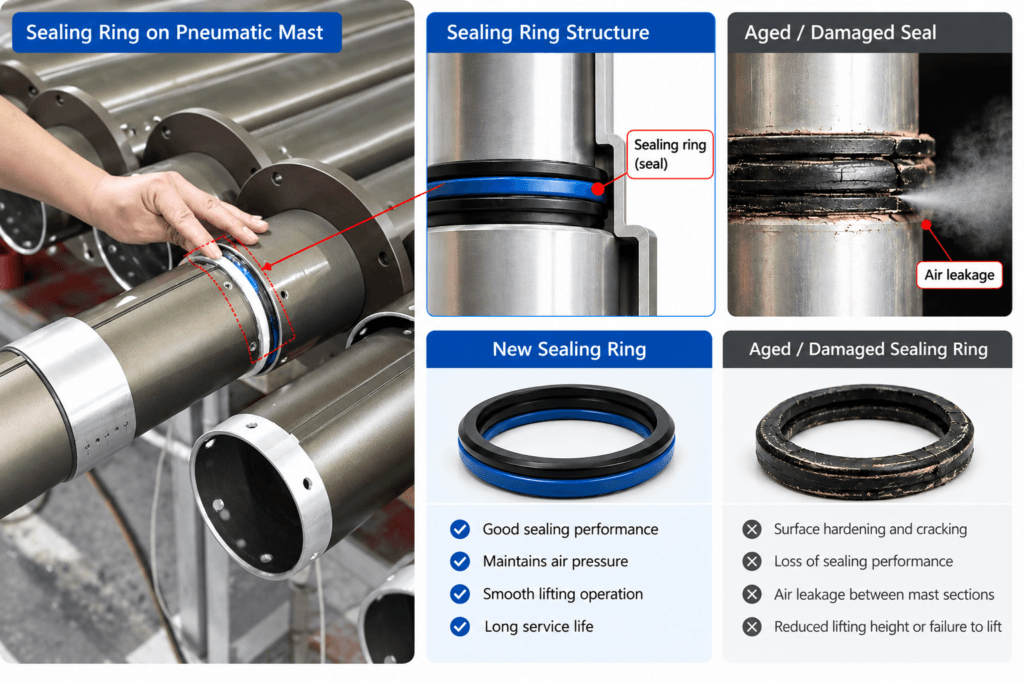
For Xushi pneumatic mast systems, severe internal seal deterioration generally leads to replacement of the mast assembly, rather than a simple on-site seal replacement. This can increase long-term maintenance costs. It is a practical consideration for Xushi’s designs, not a claim that every pneumatic mast from every manufacturer must be replaced when seals age.
Electric vs Pneumatic Telescopic Mast: Quick Comparison
| Feature | Electric Mast | Pneumatic Mast |
|---|---|---|
| Lifting method | Internal screw-driven actuator | Compressed air |
| Movement | Smooth and controlled | Often faster extension |
| Minimum operating temperature* | Approx. -41°C | Approx. -31°C |
| Cable routing | External only | Internal or external, depending on model |
| Air compressor | Not required for mast lifting | Required unless suitable onboard air is available |
| Extension ratio | Depends on screw and mast design | Well suited to multiple nested sections |
| Seal aging | Usually does not stop lifting | May cause air leakage and lifting problems |
| Main maintenance focus | Screw drive, motor, electrical system | Seals, air supply, valves and tubing |
Temperatures describe suitable Xushi configurations, not universal limits for all electric or pneumatic masts.
Neither technology is automatically better. The correct choice depends on what the vehicle needs to carry, how high it must lift and where it will operate.
Five Factors to Consider Before Choosing
1. Extended Height and Storage Space
Specify both extended height and retracted height. A taller mast may improve lighting coverage, but it also introduces greater structural and wind-loading considerations. For high-reach applications with limited storage space, a multi-section pneumatic mast can be attractive. For controlled lifting at heights supported by the chosen design, an electric mast can be practical.
Also check the vehicle’s roof height, transport clearance and mounting position. Do not select a mast by its advertised maximum height alone.
2. Top Payload and Wind Load
The total payload includes the LED lights, cameras, pan-tilt unit, antenna, brackets and attached cables. In addition to weight, the equipment’s center of gravity and projected wind area affect the forces acting on the mast.
A lightweight but wide lighting head can create substantial wind load. The mast diameter, number of sections and mounting structure should be assessed for the actual payload and operating conditions, not only the nominal weight rating.
3. Operating Temperature
If a fire truck will work in severe winter conditions, check the minimum required temperature early in the design process. Xushi electric screw-driven mast configurations can be suitable down to approximately -41°C, compared with around -31°C for its pneumatic configurations. This difference may favor an electric solution for extreme-cold projects, provided the required height and payload are supported.
4. Cable Routing and Vehicle Integration
Choose the cable arrangement according to the equipment at the top. Xushi electric masts require external cables, because their screw-driven actuator is inside the mast. Pneumatic designs may offer internal or external cable options.
An electric mast needs a suitable electrical supply. A pneumatic mast needs an air supply and space for associated components. Both may require separate electrical power for LED lights, pan-tilt units and control systems. Confirm the vehicle voltage, available mounting area and access for inspection.
5. Maintenance and Total Ownership Cost
An electric mast avoids seal-dependent pneumatic lifting, which can reduce the risk of seal-related lifting failures. It still requires inspection of the screw mechanism, motor, fasteners, cables and controls.
A pneumatic mast requires attention to air leaks, seals, tubing, valves and the compressor or other air source. Because severe internal seal aging in Xushi’s pneumatic designs generally makes mast assembly replacement the practical remedy, consider the potential replacement cost alongside the initial purchase price.
Which Mast Should You Choose?
An electric telescopic mast is worth considering when the priority is smooth lifting, very low-temperature operation, simpler integration without an air compressor and reduced dependence on pneumatic seals. External cable routing must be acceptable.
A pneumatic telescopic mast may be the better choice when greater extension relative to its retracted length, fast deployment or internal cable routing is important. The vehicle also needs a suitable air supply, and seal-related maintenance should be included in the ownership plan.
Some fire truck light towers combine both technologies: an electric actuator raises a folded mast from horizontal to vertical, while compressed air extends its telescopic sections. Electric motors may also control the pan-tilt lighting head. Therefore, always distinguish between the fold-down mechanism, the mast extension mechanism and the complete light tower system.
What Information Should You Send the Manufacturer?
For a suitable recommendation, provide the vehicle type; required extended and retracted heights; total top payload; installation dimensions; operating voltage; lowest expected temperature; and whether internal or external cable routing is preferred. Photos or drawings of the intended mounting position are also helpful.
If cameras, antennas or large lighting heads are installed, include their dimensions and mounting brackets so that wind load and the center of gravity can be evaluated.
Telescopic Mast Solutions from Xushi
Wenzhou Xushi Intelligent Security Co., Ltd. manufactures customized vehicle-mounted telescopic masts and fire truck light towers, including electric screw-driven masts, pneumatic masts, fold-down lighting systems and pan-tilt lighting heads.
The right choice depends on the complete vehicle design—not a single specification. Contact Xushi with your height, payload, temperature and installation requirements to discuss a suitable electric or pneumatic mast configuration.
Frequently Asked Questions
Can an electric telescopic mast use an internal cable?
Not with Xushi’s internal screw-driven structure. The screw mechanism occupies the internal space, so power and signal cables must be routed externally.
Does a pneumatic telescopic mast need electricity?
Compressed air provides the lifting force, but an electrically powered compressor may be needed. LED lights, controls and pan-tilt motors also normally need electrical power.
Does seal aging mean the entire pneumatic mast must be replaced?
For Xushi pneumatic mast systems, severe deterioration of internal seals generally makes replacement of the mast assembly the practical option. Other manufacturers’ service procedures may differ.
Which mast is best for extremely cold environments?
A suitably configured Xushi electric screw-driven mast may be a better option for temperatures approaching -40°C, but the final decision must still consider required height, payload and installation conditions.