
Fire Truck Scene Lighting: A Complete Guide (2026)
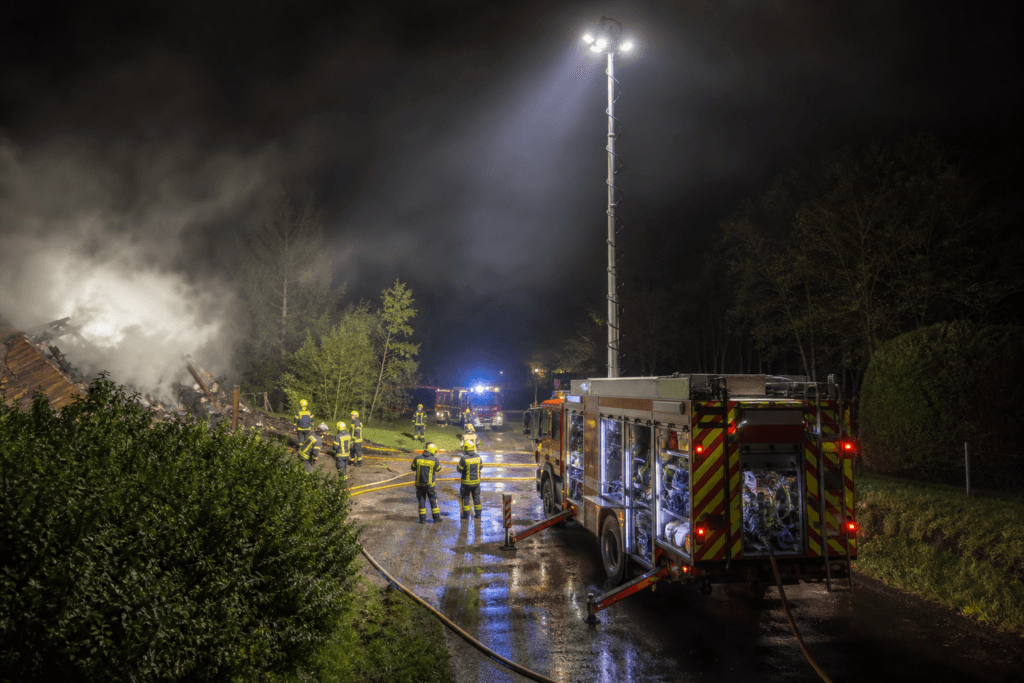
When a fire truck arrives on scene at night, reliable scene lighting isn’t a luxury—it’s a critical safety tool. Fire truck scene lighting systems illuminate the work area, help firefighters identify hazards, and ensure rescue operations run smoothly. In this guide, we’ll break down everything you need to know about scene lights for fire trucks, from telescoping light towers to LED flood lights, and help you choose the right system for your apparatus.
1. What Is Fire Truck Scene Lighting?
Fire truck scene lighting refers to dedicated lighting systems mounted on fire apparatus that provide broad, high-intensity illumination of the work area around the vehicle. Unlike headlights—which point forward and illuminate the road—or warning lightbars—which alert other motorists—scene lights are designed to flood the immediate surroundings with bright, even light so firefighters can operate safely and effectively.
These systems are typically activated on scene, not while driving. They can be mounted on the roof, sides, rear, or deployed as portable units. The goal is simple: turn a dark, chaotic emergency scene into a well-lit work environment where every detail is visible.
Common applications include structural firefighting, vehicle extrication, hazardous material response, search and rescue operations, and emergency command post setup. Whether it’s a midnight highway accident or a rural fire with no streetlights, proper scene lighting can mean the difference between a safe operation and a costly mistake.
2. Why Is Scene Lighting Important for Fire Trucks?
The importance of fire truck scene lighting goes far beyond simply being able to see in the dark. Here are the key reasons it matters:
Safety for firefighters. Emergency scenes are inherently dangerous—debris, uneven ground, downed power lines, and hazardous materials are all harder to spot in low light. Adequate scene lighting reduces trip-and-fall injuries, helps firefighters identify hazards, and improves overall situational awareness.
Operational efficiency. When the scene is well-lit, crews work faster and more accurately. Victim extrication, patient assessment, tool selection, and hose line deployment all happen more quickly when firefighters can see what they’re doing.
Regulatory compliance. Many countries and fire service organizations set minimum lighting requirements for fire apparatus. In the United States, NFPA 1901 (Standard for Automotive Fire Apparatus) specifies lighting levels for various areas around the vehicle. Meeting these standards isn’t just good practice—it’s often required.
Command and control. A well-lit scene improves communication and coordination. Incident commanders can see the full picture, allocate resources effectively, and maintain accountability for personnel.
3. Types of Fire Truck Scene Lighting Systems
There are three main types of scene lighting systems used on fire trucks today. Each has strengths and weaknesses, and many apparatus use a combination of all three.
3.1 Roof-Mounted Telescoping Light Towers
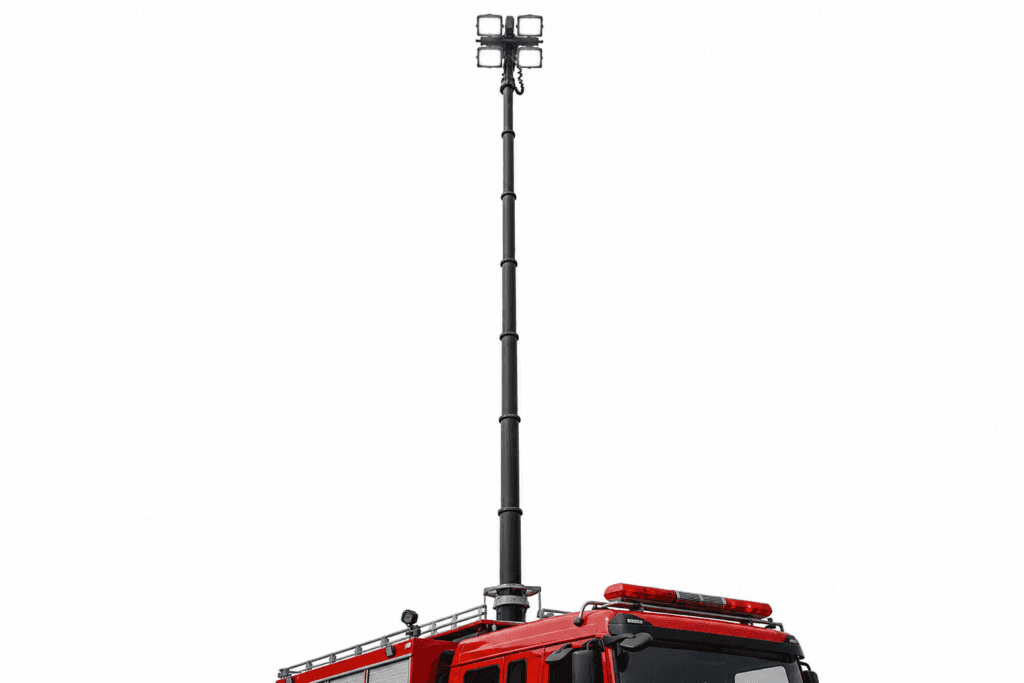
Roof-mounted telescoping light towers are the most powerful and popular option for modern fire apparatus. These systems feature a telescopic mast—typically pneumatic, electric, or hydraulic—that raises 3 to 9 meters above the roof, with one or more flood light heads at the top.
Advantages:
- Elevated lighting position eliminates shadows and provides even coverage over a large area
- Folds down flush to the roof when not in use, preserving vehicle aerodynamics and clearance
- Many models offer 360° rotation and adjustable tilt for precise lighting control
- Wired or wireless remote control allows operation from the cab or scene
Disadvantages:
- Higher upfront cost compared to fixed lights
- Requires roof reinforcement and professional installation
- Mast mechanism adds maintenance points
Best for: Primary scene lighting on pumpers, rescue trucks, and command vehicles where maximum coverage is needed.
3.2 Portable Scene Lights
Portable scene lights are standalone units that can be carried and positioned anywhere on scene. They typically run on battery power or connect to the truck’s electrical system via a cable.
Advantages:
- Maximum flexibility—place light exactly where it’s needed
- Can be deployed away from the truck, such as inside a building or at a remote extrication point
- Lower cost and no installation required
Disadvantages:
- Limited coverage area compared to elevated towers
- Require manual transport and setup
- Battery-powered units have limited runtime
Best for: Supplemental lighting, special operations, and scenes where lighting needs extend beyond the truck’s immediate footprint.
3.3 Fixed Flood Lights
Fixed flood lights are permanently mounted to the body of the truck—typically on the sides, rear, or front bumper. They provide directional lighting in specific zones.
Advantages:
- Lowest cost option
- Simple, reliable operation with no moving parts
- Instant on with no deployment time
Disadvantages:
- Low mounting position creates shadows and uneven lighting
- Fixed angle can’t be adjusted on scene
- Limited coverage area
Best for: Budget-conscious builds, zone-specific lighting, and as a supplement to a primary telescoping tower.
Comparison at a Glance
| Feature | Telescoping Light Tower | Portable Scene Lights | Fixed Flood Lights |
|---|---|---|---|
| Mounting Height | 3–9 m | 1–2 m | 1–2 m |
| Coverage Area | Excellent | Moderate | Limited |
| Flexibility | Moderate (rotates/tilts) | Excellent (fully portable) | Low (fixed) |
| Cost | High | Moderate | Low |
| Installation | Professional install required | None | Moderate |
| Best For | Primary lighting | Supplemental / mobile | Zone lighting |
4. Key Factors to Consider When Choosing Scene Lighting
Selecting the right fire truck scene lighting system involves balancing several factors. Here’s what to evaluate:
Brightness (Lumens)
Lumens measure the total amount of visible light emitted by a source. For fire truck scene lighting, typical requirements range from 10,000 lumens for small apparatus to 100,000+ lumens for heavy rescue and command vehicles. More isn’t always better—excessive brightness can create glare and wash out details. Match the output to your typical scene size.
Height / Mast Length
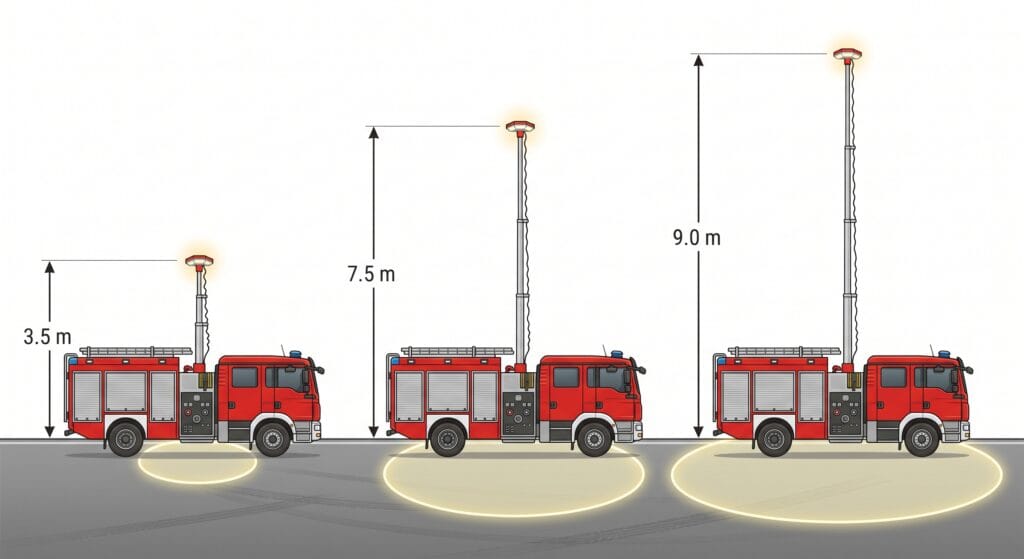
The height of your telescoping mast directly determines how large an area you can illuminate. Common mast heights include 3.5m, 4.5m, 6m, 7.5m, and 9m. Taller masts provide wider, more shadow-free coverage but also increase wind load and require more roof structural support. As a rule of thumb, medium pumpers typically use 4.5–6m masts, while heavy rescue and command vehicles go 7.5–9m.
Light Source: LED vs Halogen
LED technology has largely replaced halogen in new fire truck scene lighting installations. LEDs offer significant energy savings (60–80% less power draw), 50,000+ hour lifespans, instant-on performance, and excellent vibration resistance. Halogen lamps are cheaper upfront but consume more power, generate more heat, and need frequent bulb replacements. We’ll cover this comparison in detail in the next section.
Power Source
Most scene lighting systems run off the truck’s electrical system (12V or 24V). It’s critical to ensure the alternator and battery bank can handle the additional load—especially when multiple high-output LED heads are running simultaneously along with other truck electronics. Some large systems may require a dedicated auxiliary generator or inverter.
Control System
Modern telescoping light towers offer a range of control options:
- Wired control panel mounted in the cab or at a pump panel
- Wireless remote control for operation from anywhere on scene
- Automatic reset / stow functions that return the mast to the travel position with one button
- Individual light head control for precise aiming
Consider which control style best fits your department’s operating procedures.
Weather Resistance & Durability
Fire trucks operate in extreme conditions—rain, snow, dust, vibration, and temperature swings. Look for systems with an IP65 or higher ingress protection rating, corrosion-resistant materials, and proven vibration testing. The mast should be rated for wind loads appropriate to your region.
5. LED vs Halogen: Which Is Better for Fire Trucks?
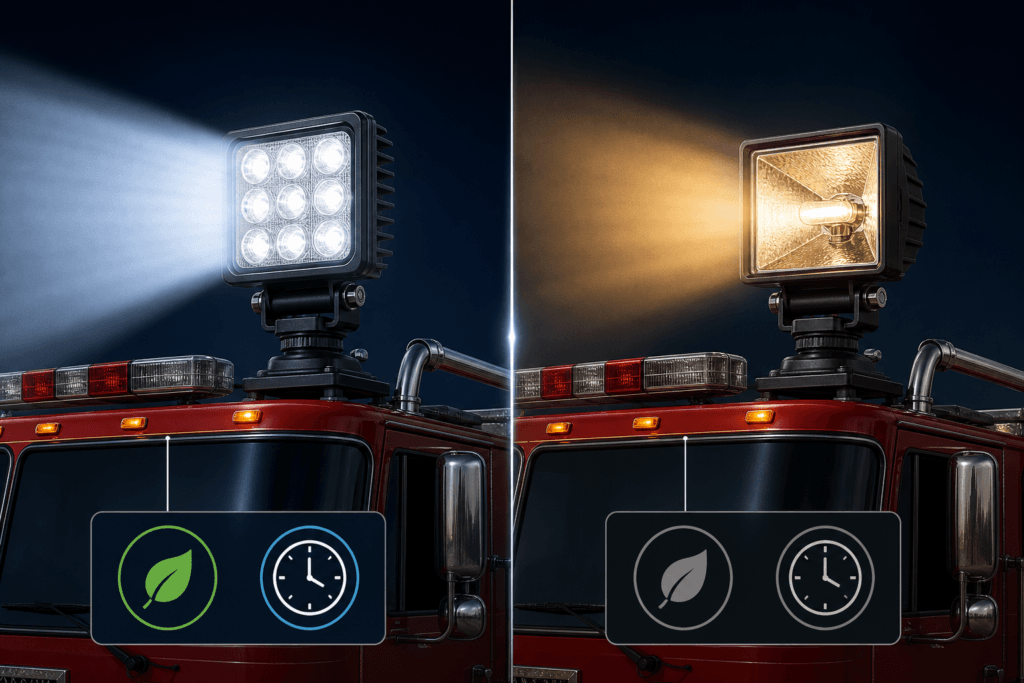
The LED vs halogen debate is largely settled for new installations, but it’s worth understanding the tradeoffs.
LED advantages:
- 60–80% less power consumption, reducing strain on the truck’s electrical system
- 50,000+ hour lifespan (halogen typically lasts 1,000–2,000 hours)
- Instant full brightness with no warm-up time
- Solid-state construction withstands vibration and shock
- Cooler operating temperature reduces fire risk and lens degradation
Halogen advantages:
- Lower upfront cost per light head
- Excellent color rendering (CRI 100), which can be beneficial for certain inspection tasks
- Simple, familiar technology
The bottom line: For new installations or retrofits, LED is the clear choice. The lower total cost of ownership, reliability, and performance advantages far outweigh the small initial premium. We’ll dive deeper into the LED vs halogen comparison—including real-world cost calculations—in our dedicated article.
6. Installation & Maintenance Tips
Proper installation and regular maintenance ensure your fire truck scene lighting system performs reliably when it matters most.
Installation best practices:
- Always have the system installed by a qualified emergency vehicle upfitter
- Verify the roof structure can support the mast’s weight and wind load
- Use waterproof, strain-relieved wiring connections
- Install a dedicated circuit breaker and switch
- Test full extension, rotation, and light operation before putting the truck into service
Routine maintenance:
- Monthly: Visually inspect the mast for damage, clean light head lenses, and test full operation
- Quarterly: Lubricate mast sections per manufacturer specs, check wiring connections, and verify remote control battery
- Annually: Have a professional inspect mast seals, motor/pneumatic components, and electrical system
- After major incidents: Wash off debris and chemicals, inspect for impact damage
Storage tip: Always stow the mast in the fully retracted, locked position before driving. Never drive with the mast extended—even a short distance.
7. Frequently Asked Questions
How tall should a fire truck light tower be?
It depends on the vehicle type and mission. Small urban pumpers typically use 3.5–4.5m masts. Medium rescue and engine companies usually go with 6–7.5m. Heavy rescue, hazmat, and command vehicles often need 9m+ masts for maximum coverage. Always factor in wind load and roof structural capacity.
What’s the difference between scene lights and flood lights?
“Scene lights” is a broad term for any lighting system designed to illuminate the work area around an emergency vehicle. “Flood lights” refers specifically to wide-beam luminaires that cast light over a broad area. In practice, the terms are often used interchangeably—the light heads on a telescoping tower are technically flood lights, and the whole system is called scene lighting.
How many lumens do I need for fire truck scene lighting?
As a rough guide: small brush trucks or quick-attack vehicles need 10,000–30,000 lumens. Standard pumpers and rescue trucks need 30,000–60,000 lumens. Heavy rescue, hazmat, and command vehicles may need 60,000–150,000 lumens or more. The actual requirement depends on the size of your typical work area and ambient light conditions.
Can I retrofit my existing fire truck with scene lighting?
Yes. Most fire apparatus roofs can accommodate a telescoping light tower, provided the structure can support the weight and wind load. You’ll need to assess electrical capacity (alternator output, battery bank), find a suitable mounting location, and have the system professionally installed. Many departments retrofit older apparatus as a cost-effective alternative to buying new trucks.
8. Conclusion
Fire truck scene lighting is one of those systems that you don’t think about until you need it—and when you need it, nothing else will do. Whether you’re spec’ing a new apparatus or retrofitting an existing one, choosing the right system means balancing coverage, brightness, height, power, and budget.
For most departments, a roof-mounted telescoping LED light tower in the 6–7.5m range offers the best combination of coverage and practicality. Supplement with portable lights for flexibility, and consider fixed floods for zone-specific needs. Prioritize LED technology for reliability and low operating cost.
At Xushi, we manufacture roof-mounted telescoping light towers from 3.5m to 9m, with pneumatic, electric, and hydraulic drive options, high-output LED heads, and full OEM/ODM customization support. If you’re looking for a reliable fire truck scene lighting manufacturer, we’d be happy to help.